ATEM bewusst gegen SCHMERZEN und ANGST einsetzen
Here's how it works: Breathe consciously Slowly Breathe in deeply through your nose into your lower abdomen. Hold your breath Short Let the air then Calm and steady out through the mouth again. Find a steady rhythm. Ideally, around 5–6 Breaths per minute.
It gets even more powerful if you make your exhale longer than your inhale.
Why this helps: Your breath is directly connected to your nervous system. When you consciously slow your breathing, you activate the part of your system responsible for relaxation and recovery – the parasympathetic nervous system.
This is what happens in your body:
- Your heartbeat will calm down
- Stress hormones decrease
- Muscle tension eases
- Your pain perception changes
Studies even show that simply by slowing your breathing, pain can be perceived as less intense.
🗝 The key is in the EXHALATION.
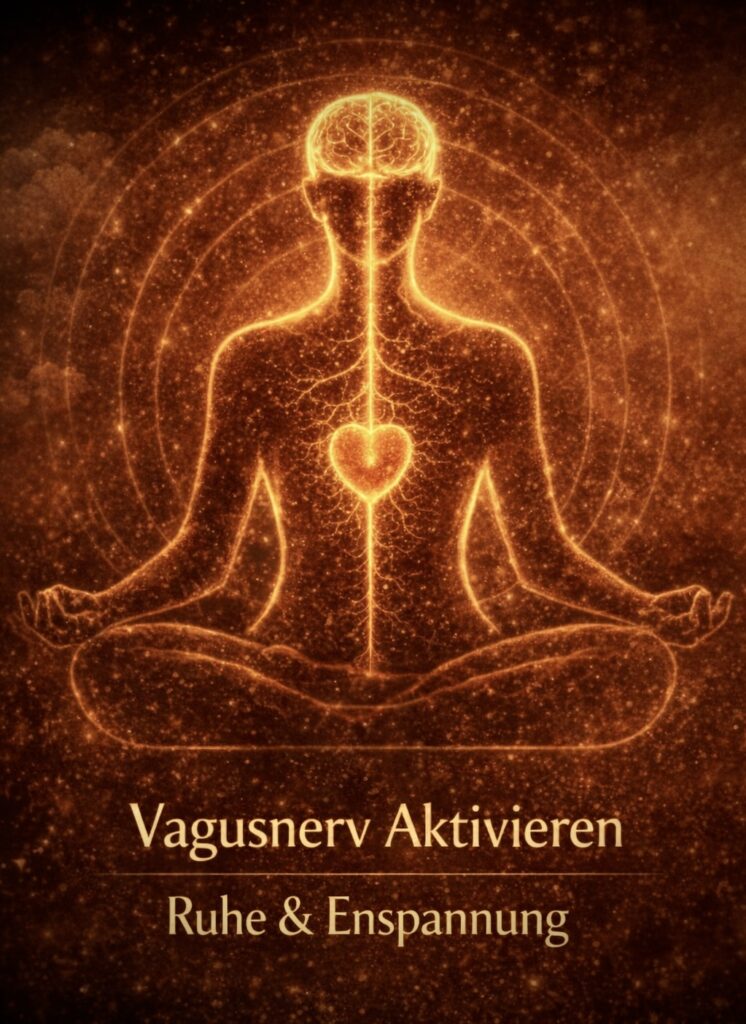
A long, controlled exhalation activates your vagus nerve, and that's what calms your system down.
One of the most effective techniques: The „physiological sigh“ Take two short breaths in through your nose, then exhale long through your mouth. This can reset your nervous system within seconds.

What many underestimate: Pain isn't just physical. It's processed in the nervous system, and that's precisely where you can intervene.
❌ When you're breathingHeimlich or you hold your breath – your body stays in alarm mode.
✅ When you breathe calmly – You're actively playing down.
Your breath is your guideline!
If things get really bad, don't forget: He is the direct link between you and your central nervous system. This is the point where you instantly influence your body.
Without aids, without preparation.
This way of breathing is not only used for pain. It is a proven tool in extreme situations. For panic attacks, intense anxiety, or even in altered states of consciousness (e.g., during overwhelming experiences or trips). Here you hold on so you don't get lost!
Why?
Because your BREATH your Anchor in chaos is.

When your head is racing, your perception is shifting, or everything feels like too much, breathing gives you something that stays stable. Something you can control when everything else feels uncontrollable.
🛟 He is the safety line. The point that holds you steady in the storm.
You don't need to „remove“ anything.
You don't have to „suppress“ anything.
You simply return to the breath.
On. Off. Calm. Steady.
This is exactly how you get yourself BACK.
💡 Brand However intense it gets... As long as you can control your breath, you have a direct path back to yourself.
That's no small thing. That's one of the most powerful tools you have!

Slow breathing reduces pain perception„
By Arthur Craig, Journal PAIN® – Phoenix 2010
A super exciting post about breathing and pain management! 🙌
The approach of influencing pain through conscious breathing techniques, in particular, is increasingly being scientifically confirmed. Studies show that mindful or slow breathing can reduce pain intensity and even alleviate anxiety.
I find it particularly valuable that a simple and everyday way is shown here of how to actively do something about pain yourself, entirely without medication. Breathing exercises are not only helpful for acute complaints, but can also provide long-term support for chronic pain.
Thank you for this helpful contribution. More content on breathing exercises, mindfulness and natural pain reduction would be really exciting! 😊
LG Betti
Wow, I tried the breathing technique you described during my last tattoo session and I'm genuinely surprised at how well it worked!
I consciously focused on slow, deep belly breathing, inhaling slowly through my nose, holding my breath briefly, and then exhaling completely controllably and longer through my mouth. What particularly helped me was focusing entirely on my breathing and not on the pain.
Normally, certain areas are quite painful for me when getting tattooed, but with this breathing technique, the pain was significantly reduced and much more bearable. It was almost as if the body shifted into a calmer state and noticeably turned down the intensity of the pain.
I wouldn't have thought such a simple method could make such a big difference. For me, it's definitely a gamechanger. Not just for tattoos, but also for future situations where you have to deal with pain.
Thanks for this great post! 🙏
I read the post on innsbruck.at about „breathing against pain“ and breathing techniques for pain reduction, and I tried it out myself straight away, and I'm really impressed with how well it works.
During my last tattoo session, I consciously used the described breathing exercise for pain management: slow, deep inhalation through the nose, a short hold, and a significantly prolonged, controlled exhalation through the mouth. This simple technique in particular helped me to divert my focus from the pain and to calm my body considerably.
The difference was clearly noticeable, especially with more intense pain points during tattooing. The pain wasn't gone, but it was significantly dulled and much more controllable. It felt as though the nervous system shifted into a calmer state.
I now use this breathing technique for stress and pain in my everyday life too, because it works quickly and without any aids. For me, it's a very valuable method from the fields of mindfulness, breathing, and natural pain regulation.
Thank you for this helpful post on inksbruck.at. Such content is truly valuable and practical for everyday life!
A really good post 👍 I would never have thought that conscious breathing could have such a strong effect on pain. Sounds simple, but makes perfect sense.
Extremely exciting explanation! I will definitely consciously try this next time, especially in stressful moments while tattooing or with pain in general.
I find this approach extremely exciting because it finally explains *why* breathing techniques work for pain, and not just *that* they work.
What particularly fascinates me is how the connection between breathing and the autonomic nervous system is made truly tangible here. When you understand that consciously slow, controlled breathing can shift the body from the sympathetic nervous system (stress mode) to the parasympathetic nervous system (regeneration), everything suddenly makes sense. This is exactly where effects like reduced muscle tension, less pain amplification in the brain, and an altered perception of intensity emerge.
I've experienced myself how pain can „shift“ as soon as I actively control my breathing, not because the stimulus is gone, but because the brain evaluates it differently. And precisely this mechanism is described here in a super understandable way.
I find it particularly impressive how much something as simple as breathing affects processes such as attention, anxiety and pain modulation. This is essentially direct access to the body's own pain system. Something that is often completely underestimated in classical considerations.
For me, this is less of a „trick“ and more of a biological tool that we should be using much more consciously.